A garden fence does more than mark the edge of your property. It can give you more privacy, make your outdoor space feel secure and provide a neat backdrop for the rest of your garden. But with so many fencing styles available, choosing the right one can be harder than it first appears.
Closeboard fencing is a popular option for homeowners who want a traditional timber fence with a solid, enclosed finish. Made from overlapping vertical wooden boards fixed to horizontal rails, it creates a strong boundary that works well in many different garden layouts. Whether you're replacing an ageing fence or planning a new garden, it's worth understanding how closeboard fencing works before deciding if it's the right fit.
So, what is closeboard fencing, how much maintenance does it need, and how does it compare with other garden fence panels? Here's what to consider before making your choice.
What Is Closeboard Fencing?
Closeboard fencing, sometimes called featherboard fencing, is a type of timber garden fencing constructed from individual vertical boards fixed closely together. The boards typically have a tapered profile and overlap slightly, creating a solid fence with very few gaps.
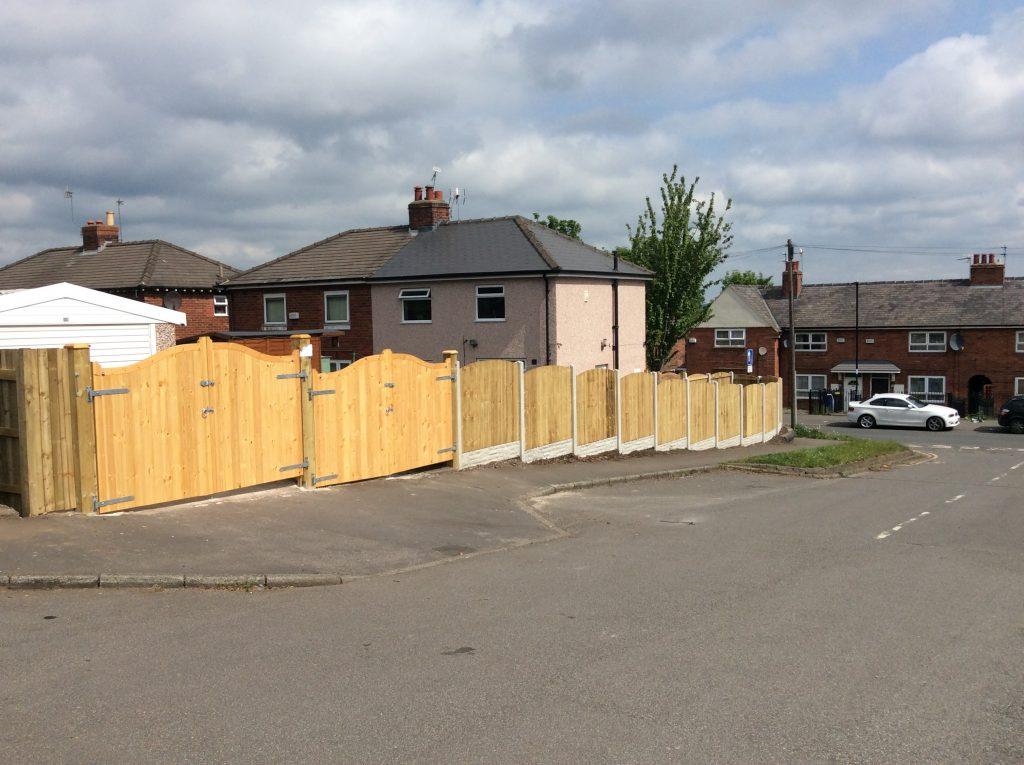
Unlike standard lap fence panels, which use overlapping horizontal boards within a framed panel, traditional closeboard fencing is usually built using vertical boards attached to horizontal supporting rails. The structure is supported by fence posts, with gravel boards often fitted along the bottom to help protect the timber from ground contact.
This construction gives closeboard fencing a traditional appearance while providing a practical boundary for gardens of different sizes.
The individual boards can also be replaced when damaged, depending on the condition of the supporting rails and posts. This can make repairs more straightforward than replacing an entire fence panel when only a small section has deteriorated.
If you're considering a new boundary for your property, our garden fencing services in Sheffield cover a range of styles and materials to suit different outdoor spaces.
Why Choose Closeboard Fencing for Your Garden?
The right fencing depends on what you want from your garden. Some homeowners prioritise privacy, while others need a sturdy boundary that can withstand regular exposure to wind and rain. Closeboard fencing offers several benefits that make it worth considering.
1. It Provides Excellent Garden Privacy
One of the main reasons homeowners choose closeboard fencing is the privacy it provides. Because the boards overlap, there are very few direct gaps through which neighbours or passers-by can see into your garden.
This makes it a practical choice for rear gardens, overlooked patios and outdoor seating areas where you want a little more seclusion.
A solid timber fence can also help define different parts of your garden, creating a clear boundary around lawns, planting areas and spaces for entertaining.
However, privacy depends on the fence's height, the level of the surrounding ground and the position of nearby windows or raised areas. If privacy is your main concern, consider these factors before choosing a design.
Our guide to garden fencing ideas for improving privacy and security can help you explore the options available for your outdoor space.
2. It Offers a Strong, Sturdy Structure
Closeboard fencing is built around supporting posts and horizontal rails, which carry the weight of the vertical boards. When properly installed and maintained, this construction can provide a durable boundary for everyday residential use.
The overall strength of the fence depends on several factors, including the quality of the timber, the spacing and depth of the posts, the condition of the rails and how securely everything is fixed together.
Ground conditions matter, too. Posts installed in unsuitable or poorly prepared ground may become unstable over time, even if the boards themselves remain in good condition.
For gardens exposed to strong gusts, the fence design and installation method are particularly important. A solid fence can catch the wind, so appropriate post foundations and sound fixings are essential.
If your garden is exposed to changing weather conditions, read our guide to choosing fence panels for windy gardens in Sheffield, which explains some of the considerations involved in selecting suitable fencing.
3. It Has a Traditional Timber Appearance
Timber fencing works well with a wide range of garden styles. Closeboard fencing has a simple, traditional appearance that suits period properties, modern homes and established gardens alike.
Its natural wooden finish can complement lawns, flower beds, shrubs, raised planters and timber decking. You can also choose to leave the timber with its natural appearance or apply a suitable exterior wood treatment to achieve your preferred finish.
Over time, untreated timber will weather and change colour. Some homeowners like this natural ageing process, while others prefer to maintain a more consistent appearance through periodic treatment.
The vertical boards also create a relatively simple backdrop, allowing plants and other garden features to stand out without competing with an elaborate fence design.
4. Individual Boards Can Often Be Repaired
A damaged fence does not always need to be replaced from end to end. One practical feature of traditional closeboard fencing is that individual boards can often be removed and replaced when the supporting structure remains sound.
For example, a cracked board or a small area of localised damage may be repairable without disturbing the rest of the fence.
However, the condition of the horizontal rails, posts and fixings needs to be checked first. If these structural components have rotted or become unstable, replacing the boards alone will not resolve the underlying problem.
For more widespread deterioration, a partial or full fence replacement may offer better long-term value.
Our fence repair service can help homeowners identify whether damaged fencing needs a targeted repair or more extensive work.
Are There Any Disadvantages to Closeboard Fencing?
Closeboard fencing has plenty to offer, but it isn't automatically the right choice for every garden. Understanding its limitations can help you make a more informed decision.
Timber Requires Maintenance
Like other wooden garden fencing, closeboard fencing is exposed to rain, moisture, sunlight and changing temperatures. Over time, these conditions can contribute to weathering, splitting, warping and rot.
The amount of maintenance required depends on the timber, its treatment, the quality of installation and the conditions around the fence.
Keeping the bottom of the boards clear of soil, leaves and standing water can help reduce moisture-related deterioration. It is also worth checking the fence periodically for loose fixings, damaged boards and signs of rot around the posts and rails.
Depending on the timber and finish, an appropriate exterior wood treatment may help protect the surface. Always follow the product manufacturer's instructions and allow the timber to dry as recommended before applying a treatment.
It Can Be More Expensive Than Basic Fence Panels
The cost of closeboard fencing varies according to the length and height of the fence, the materials selected and the amount of installation work required.
Traditional closeboard fencing is assembled from individual boards and supporting rails, which can involve more materials and labour than installing some standard pre-made fence panels.
However, the initial price is only one part of the decision. The quality of the materials, expected maintenance and potential repair costs should also be considered.
If you are replacing a long boundary, request a detailed quotation that explains what is included, such as posts, gravel boards, removal of old fencing and waste disposal. Comparing like-for-like quotations will give you a clearer picture of the overall cost.
Solid Fencing Can Catch the Wind
Closeboard fencing provides a relatively solid surface, which is useful for privacy but can also expose the structure to wind pressure.
This is particularly relevant in gardens that are open, elevated or exposed to strong gusts. The fence's height, length, supporting posts and ground conditions all influence how well it performs.
A suitable installation can help reduce the risk of movement and failure, but no fence is completely immune to storm damage.
If your existing fence regularly leans or suffers damage during bad weather, it is worth checking whether the problem comes from the boards, the posts or the foundations before installing a replacement.
Closeboard Fencing vs Lap Panel Fencing: What's the Difference?
Closeboard and lap panel fencing are both common choices for UK gardens, but their construction differs.
Traditional closeboard fencing uses individual vertical boards attached to horizontal rails. Lap panels are pre-made sections consisting of overlapping horizontal slats fitted within a frame.
Closeboard fencing is often chosen for its sturdy construction, traditional appearance and the ability to replace individual boards when necessary. Lap panels are popular with homeowners looking for a straightforward, widely available fencing option.
Neither option is automatically better for every property. The right choice depends on your budget, preferred appearance, garden layout and the condition of the existing fence structure.
When comparing the two, consider how each option will be supported, how easy it will be to repair and whether the finished fence will provide the privacy you need.
It is also worth checking the quality of the specific panels or materials being offered. Construction and timber quality can vary, so the style alone does not determine how long a fence will last.
For more guidance on choosing a suitable design, see our guide to installing a new fence.
How Much Does Closeboard Fencing Cost?
There is no single price for closeboard fencing because every garden presents different requirements. A short, straightforward boundary on level ground will generally involve different costs from a long fence that needs old posts removed, uneven ground prepared or difficult access managed.
The main factors affecting closeboard fencing cost include:
Fence height and length: Taller fences and longer boundaries require more materials and usually more installation time.
Timber quality: The type, grade and treatment of the boards, rails and posts can influence the initial price and ongoing maintenance requirements.
Posts and gravel boards: The supporting structure is an important part of the overall cost. Concrete posts, timber posts and different gravel board options each have their own material and installation considerations.
Ground conditions: Sloping, uneven or difficult ground may require additional preparation and adjustments to the fence line.
Removal of existing fencing: If an old fence needs to be dismantled and disposed of, this may add to the overall project cost.
Access and installation requirements: Narrow access routes, obstacles, nearby structures and difficult working conditions can affect the time needed to complete the work.
Rather than choosing a fence based on the lowest advertised price alone, consider the complete installation and the condition of the materials being supplied.
Acorn Fencing provides fencing services across Sheffield and offers free, no-obligation quotations following an assessment of your project. This gives you the opportunity to discuss your requirements and understand the work involved before making a decision.
What Should You Consider Before Installing Closeboard Fencing?
Choosing the fence style is only one part of the planning process. A few practical checks can help you avoid problems once installation begins.
Check the Boundary and Fence Height
Before installing a new fence, establish where the boundary lies and check any relevant restrictions.
In England, permitted fence heights generally depend on the fence's position and whether it is next to a highway used by vehicles or the footpath of such a highway. Planning permission may be required in some circumstances, and other restrictions can apply, including those affecting listed buildings and designated areas.
Do not assume that an existing fence's height automatically means a replacement can be installed at the same height. Check the requirements that apply to your property before work begins.
For more information, read our guide to garden fence height rules in the UK.
Think About the Ground Conditions
The ground along your boundary can influence how closeboard fencing should be installed. Sloping gardens, soft ground and areas with drainage problems may require additional planning.
On sloping land, the fence can sometimes follow the gradient or be installed in stepped sections. The most suitable approach depends on the steepness of the slope, the fence design and the finished appearance you want.
It is also important to consider how water drains around the fence. Timber that remains in contact with damp soil or trapped organic matter may deteriorate more quickly.
Choose Suitable Posts and Gravel Boards
Posts support the fence, while gravel boards can help keep the bottom of the timber boards away from the soil.
Timber posts can provide a consistent natural appearance, while concrete posts are another option for homeowners who want a different supporting structure. The best choice depends on the fence design, ground conditions, budget and maintenance preferences.
Gravel boards are worth considering because they create a barrier between the fence boards and the ground. This can help reduce direct contact with damp soil and make it easier to maintain the area along the base of the fence.
Consider Your Long-Term Plans
Think about how you use your garden and whether your requirements may change in the future.
If you plan to add decking, a patio, raised beds or a new garden gate, it makes sense to consider these features before finalising the fence layout. Planning the different elements together can help create a more practical and consistent outdoor space.
You can explore examples of completed projects in our fencing and decking gallery to get ideas for your own property.
Is Closeboard Fencing Right for Your Garden?
Closeboard fencing is worth considering if you want a traditional timber boundary that provides privacy and a solid, enclosed appearance. Its construction can also make individual board repairs possible, provided the supporting rails and posts remain in good condition.
It may be particularly suitable for homeowners who want to screen an overlooked garden, create a clear boundary or replace an ageing wooden fence with a similar style.
However, it may not be the best fit if you want a very low-maintenance option, a decorative open design or a fence that allows more wind to pass through. In those cases, comparing alternative fencing styles can help you find a solution that better suits your priorities.
The important thing is to look beyond appearance alone. Consider the materials, supporting structure, maintenance requirements, ground conditions and total installation cost before making your decision.
At Acorn Fencing, we help homeowners across Sheffield explore fencing options that suit their property and practical needs. Whether you are planning a complete installation or dealing with damage to an existing boundary, our team can discuss the available options and provide a free, no-obligation quotation.
If you are ready to improve your garden boundary, contact Acorn Fencing to discuss your project.