A taller fence can make a garden feel more private, secure and sheltered. But before ordering a run of six-foot panels or deciding to add another section to the top, there is one question worth answering first: how high can a garden fence be?
In England, the answer is usually straightforward. A new fence can generally be up to 2 metres high without planning permission when it isn't next to a highway. If it's beside a highway used by vehicles, or the footpath of such a highway, the limit is generally 1 metre.
But that isn't the end of the story.
The position of the boundary, the type of property, existing planning conditions and whether you're replacing or increasing the height of an existing fence can all make a difference.
And then there's the practical side. A fence that is technically allowed may still not be the right choice for the garden, particularly if it blocks light, catches a lot of wind or creates problems with neighbours.
Here's what you need to know before choosing your fence height.
So, How High Can a Garden Fence Be?
For most homeowners in England, the simple answer is:
Up to 2 metres high if the fence isn't next to a highway.
Up to 1 metre high if the fence is next to a highway used by vehicles, including the footpath alongside it.
If you want to go above those heights, you will generally need to check whether planning permission is required. The Planning Portal confirms these height limits for fences, walls and gates.
That doesn't mean a 2-metre fence is automatically permitted in every situation, though.
There are exceptions, including certain listed buildings, Article 4 directions and planning conditions that restrict development rights.
So if your property has unusual planning restrictions or you're proposing something outside the normal height limits, it's worth checking before work begins.
Why Is the 2-Metre Fence Height Important?
The 2-metre limit comes up frequently because it's roughly the height of a standard tall garden fence.
For many homeowners, a 1.8-metre or 2-metre fence is enough to provide a useful level of privacy without making the garden feel completely enclosed.
It can help screen patios and seating areas from neighbouring properties, define the boundary and give children or pets a more secure garden to use.
But there is a difference between choosing a fence that is 2 metres high and simply making an existing fence taller.
If you already have a fence and want to add trellis, screening or another panel on top, the overall height matters. You shouldn't assume that because the original fence was permitted, you can add another section without checking the rules.
What If My Fence Is Next to a Road?
This is where the permitted height can change significantly.
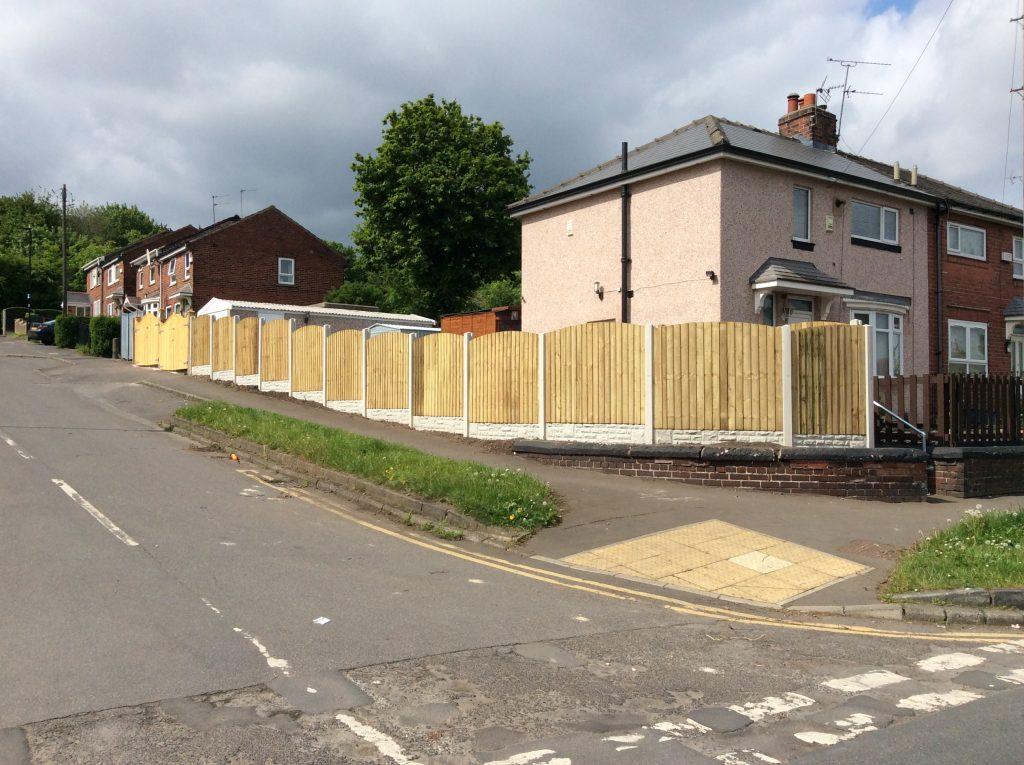
If your fence is next to a highway used by vehicles, or the footpath of such a highway, a new fence generally cannot exceed 1 metre in height without planning permission.
This is particularly relevant to front gardens.
A tall privacy fence that might be perfectly acceptable at the back of a property could require planning permission at the front if it sits alongside the highway.
It's therefore important to think about where the fence is being installed, not just how tall you want it to be.
If you're replacing a front boundary fence, for example, don't order standard 6-foot panels before checking whether the location allows that height.
Can I Have a 6-Foot Fence in My Back Garden?
Generally, yes.
A 6-foot fence is approximately 1.83 metres, so it falls below the usual 2-metre permitted height for a boundary that isn't next to a highway.
That's one reason 6-foot fencing is such a common choice for rear gardens.
It offers a good balance between privacy and practicality without reaching the usual planning threshold.
However, the fact that a 6-foot fence is below 2 metres doesn't automatically mean every installation is permitted. The Planning Portal lists other circumstances where normal permitted development rights may not apply, including listed buildings and certain planning restrictions.
Can I Have a 2-Metre Fence Between Me and My Neighbour?
In many cases, yes.
A boundary fence of up to 2 metres can generally be installed without planning permission where the fence isn't next to a highway.
But there's another question that homeowners sometimes overlook:
Who actually owns the boundary?
Planning rules and property ownership are two separate issues.
Being allowed to build a fence of a particular height doesn't necessarily mean you can remove, alter or replace a boundary feature that belongs to your neighbour.
If you're unsure where the legal boundary sits or who is responsible for the existing fence, it's worth checking your property documents and discussing the proposal with your neighbour before arranging the work.
This can prevent an otherwise straightforward fencing project from turning into an unnecessary boundary dispute.
What If I Want a Fence Taller Than 2 Metres?
If you want a new fence higher than the normal 2-metre permitted limit, you may need planning permission.
That doesn't necessarily mean planning permission will be refused. It means the proposal needs to be considered through the appropriate planning process.
There may be legitimate reasons for wanting additional height.
Perhaps the garden is overlooked by nearby flats. Maybe you're trying to improve privacy around a seating area, or the property is on an exposed site where additional screening would make the garden more comfortable.
Before increasing the height, though, consider whether another approach could solve the problem.
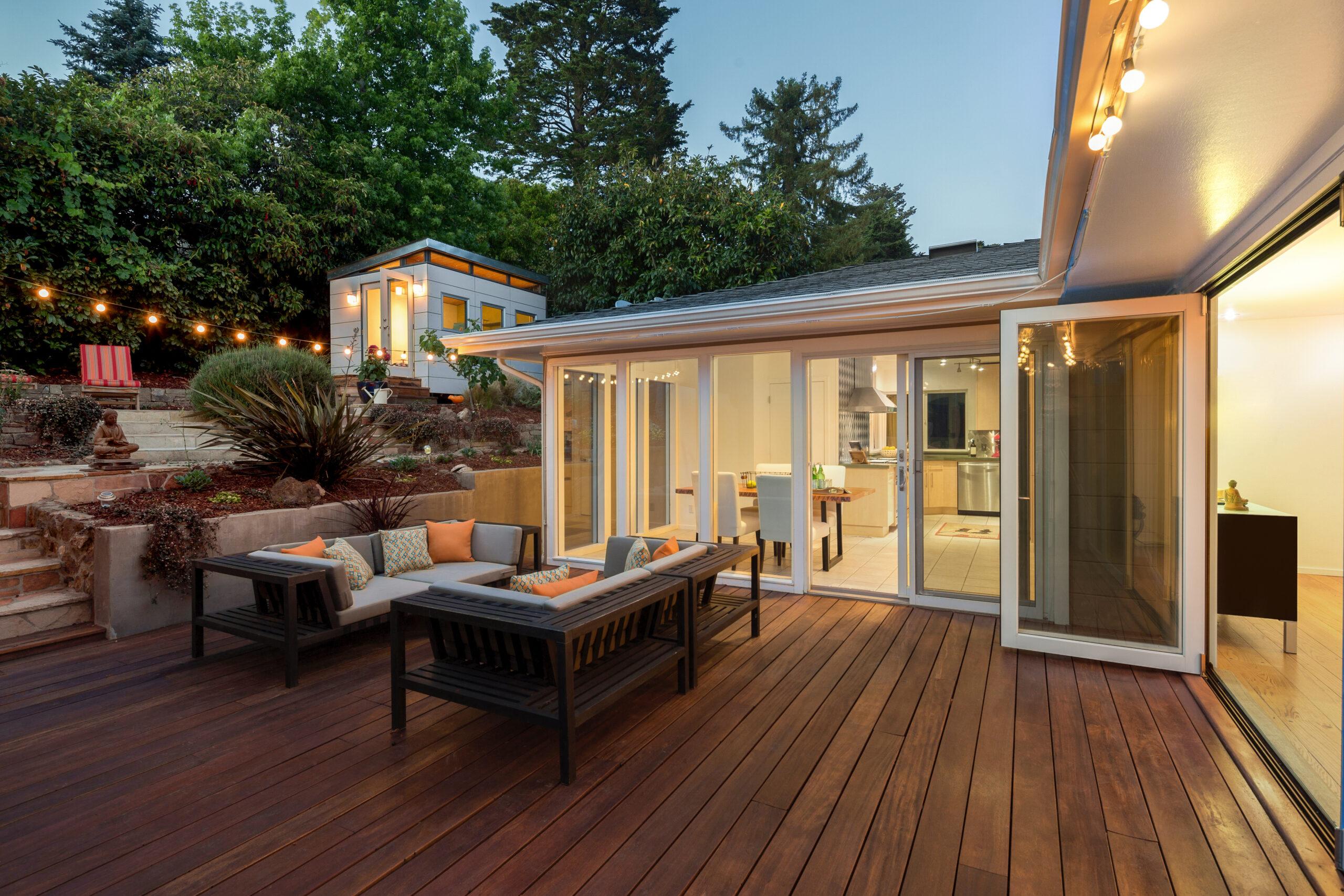
For example, carefully positioned planting, a pergola, a lower fence with trellis or screening around a specific seating area may provide the privacy you're looking for without creating a very tall boundary around the entire garden.
Does Fence Height Include Trellis?
If you're thinking about adding trellis to the top of a fence, don't treat it as though it doesn't count.
The overall height of the boundary structure is important when considering whether you are within the relevant height limits.
A 1.8-metre fence with a 30cm trellis section on top is effectively around 2.1 metres high.
So if your plan is to add decorative trellis to an existing fence, measure the complete height rather than just the fence panel.
This is particularly important if you're close to the 2-metre limit already.
What About Replacing an Existing Fence?
Replacing a fence isn't always the same as putting up a brand-new one.
The Planning Portal states that you generally don't need planning permission to alter, maintain, improve or take down an existing fence, wall or gate if its height isn't increased, subject to the relevant restrictions.
So if you have an existing fence that is already 2 metres high and you're replacing it with another fence at the same height, the situation can be different from increasing the boundary to 2.5 metres.
The important phrase here is “if its height isn't increased.”
If you're replacing an old 5-foot fence with a 6-foot fence, for example, you're changing the height and should check whether planning permission or another restriction applies.
What About Sloping Gardens?
Fence height becomes slightly more complicated when the ground isn't level.
If your garden slopes, you can't always judge the height by looking at the fence from one side.
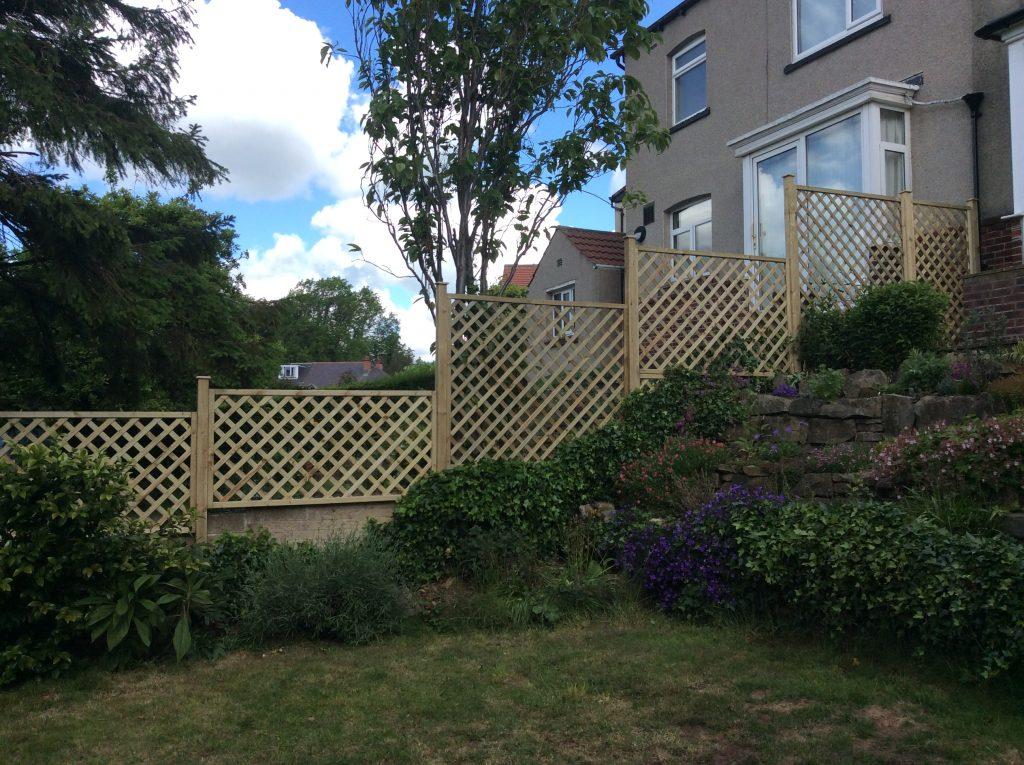
The relevant measurement is generally taken from the ground level where the fence is built. Local authority guidance gives examples where a fence can appear much taller from a neighbouring garden because the adjacent ground is lower, while the fence itself is still measured from the ground on which it stands.
This is one reason a fencing site visit can be useful before deciding on panel sizes.
A professional installer can look at the gradient, existing ground levels and boundary and work out the most practical way to install the fence.
Depending on the garden, this might involve stepping the panels or using another installation approach rather than trying to force one continuous level across uneven ground.
Does a Higher Fence Always Mean More Privacy?
Not necessarily.
A taller fence can provide more screening, but the design and position matter just as much.
For example, if your neighbour's upstairs windows overlook the garden, adding another 30cm to a boundary fence may not solve the problem.
Likewise, if the part of the garden you actually use for sitting is tucked into one corner, you may not need a 2-metre fence around the entire perimeter.
Sometimes the better solution is to focus screening where you need it most.
This could mean combining fencing with planting, trellis or a pergola to create a more private seating area without making the whole garden feel enclosed.
What Is the Best Height for a Garden Fence?
The legal maximum isn't necessarily the best height for your garden.
For many rear gardens, 1.8 metres to 2 metres is a practical range because it provides useful privacy while still allowing some openness.
But your ideal height depends on what you're trying to achieve.
If the main priority is:
Privacy: A taller fence can screen neighbouring gardens and ground-floor windows.
Security: A well-built fence can help define the property and make access more difficult.
Keeping children or pets in: The design, gaps and gate arrangement can be just as important as the overall height.
Appearance: A lower boundary may suit a front garden better than a tall privacy fence.
Wind protection: A solid tall fence can behave differently in exposed locations and needs appropriate construction and support.
Garden design: The fence should work with the size and shape of the garden rather than dominate it.
Acorn Fencing installs garden fencing throughout Sheffield and considers factors such as ground conditions, measurements, preferred style and installation requirements before carrying out the work.
Should You Speak to Your Neighbour Before Installing a Fence?
Even where planning permission isn't required, talking to your neighbour can be a sensible move.
You don't necessarily need their permission to install a fence on land that you own, but discussing the proposal can avoid misunderstandings about the boundary, appearance or access.
This is especially important if the fence sits directly along a boundary or you're replacing a shared-looking boundary feature.
It's also worth remembering that the Party Wall etc. Act 1996 does not generally treat ordinary wooden fences as party fence walls. The government's explanatory guidance specifically distinguishes wooden fences from party fence walls.
That doesn't mean boundary disputes are irrelevant. It simply means you shouldn't assume that the Party Wall Act automatically governs an ordinary timber garden fence.
If you're unsure about ownership or the legal boundary, get appropriate property or legal advice rather than relying on assumptions.
How Acorn Fencing Can Help
Choosing a fence isn't just about picking a panel from a catalogue.
The height, style, posts, ground conditions, boundary position and installation method all affect how the finished fence looks and performs.
Acorn Fencing has been installing garden fencing across Sheffield since 1990, including new timber fences, replacement fencing, repairs and boundary enclosures. Our company carries out a site visit before installation to assess measurements, ground conditions and the homeowner's preferred fencing style.
That on-site assessment is particularly useful if your garden has slopes, awkward access, existing walls or an unclear boundary.
Acorn also provides fencing repairs and replacements, so you don't necessarily have to replace an entire fence if only certain sections have failed.
The Bottom Line
So, how high can a garden fence be?
For most properties in England, a new fence can generally be up to 2 metres high without planning permission, provided it isn't next to a highway and no other planning restrictions apply.
If the fence is next to a highway used by vehicles or its footpath, the usual limit is 1 metre without planning permission.
But fence height isn't just a planning question.
You also need to think about the boundary, your neighbour, the slope of the garden, wind exposure, privacy and how the finished fence will look alongside the property.
If you're replacing an existing fence, increasing its height or considering something taller than the usual limits, check the position before installation rather than finding out afterwards that your plans need to change.
For homeowners in Sheffield, a professional fencing contractor can also assess the garden itself and recommend a practical height and installation method based on the site.